
Honest Data Science with GenAI Course Experience (2026)
Table of Contents
- What Made Abhishek Look Towards Data Science
- Why I Chose a Structured Learning Path
- Getting Into the Fundamentals
- From Data Analysis to Machine Learning
- Bringing GenAI Into Data Science
- Working on Practical Data Science Problems
- The Support Available During the Learning Process
- Preparing for the Data Scientist Role
- Final Thoughts on Abhishek's Data Science Journey
- Frequently Asked Questions
Learning Data Science is not just about knowing Python or understanding machine learning algorithms. It involves working with data, understanding the problem behind it, building models, interpreting results and gradually becoming comfortable with the tools used in the field.
For Abhishek, the learning journey eventually helped him move into a Data Scientist role. His experience with the Coding Ninjas Data Science with GenAI Program reflects the process of building these skills through a structured curriculum, practical work and career-focused preparation.
The Coding Ninjas Data Science with GenAI Program is a 9-month intensive job bootcamp covering areas such as Data Science fundamentals, data cleaning and preprocessing, exploratory data analysis, statistics, linear algebra and machine learning. The program also brings Generative AI and AI-powered tools into the learning experience, along with hands-on projects, doubt support, mentorship and placement assistance.
This is Abhishek's experience of learning Data Science, working through the program and preparing for a career in the field.
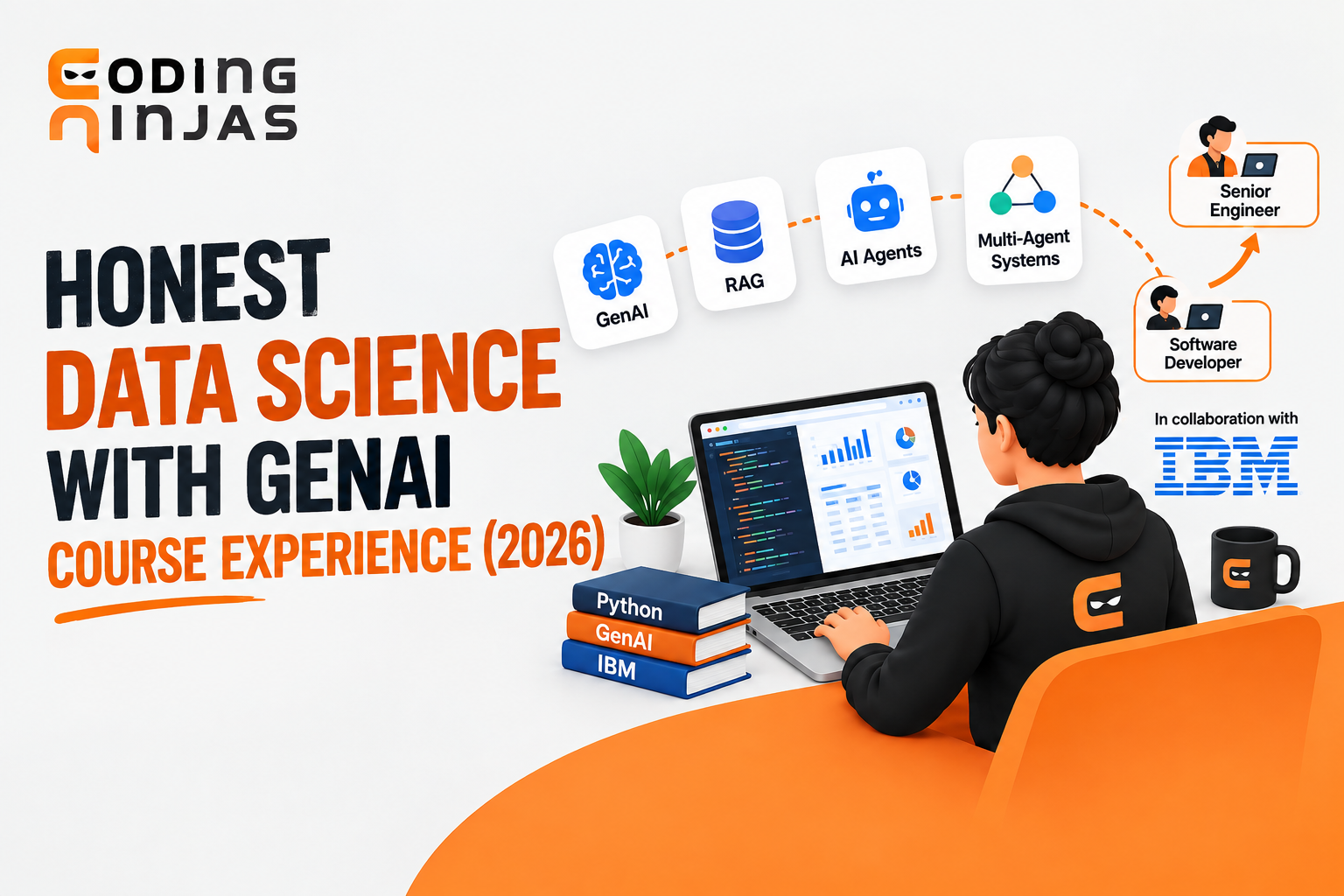
What Made Abhishek Look Towards Data Science
Data Science can look very broad when you are trying to understand it on your own. There are different concepts to learn, several tools to work with and multiple directions you can take.
For someone trying to build a career in the field, knowing what to learn is only one part of the challenge. The bigger question is often how to put those concepts together and develop the ability to work on actual data problems.
That is where having a structured learning path can make a difference. Instead of treating Python, statistics, machine learning and other topics as completely separate subjects, the learning process needs to gradually connect them. For Abhishek, this journey eventually led to becoming a Data Scientist.
Why I Chose a Structured Learning Path
I wanted to build my understanding of Data Science in a more organised way instead of approaching every topic separately. Data Science covers a wide range of concepts, from data preparation and exploratory analysis to statistics and machine learning. I wanted to understand how these areas fit together and how they are applied when solving an actual problem.
A structured program gave me a defined curriculum to follow. It also meant that I could learn concepts, practise them and then use them while working on projects.
The inclusion of GenAI was another part that interested me. AI is becoming increasingly relevant to technical workflows, so I wanted to understand how these tools could be used alongside the fundamentals of Data Science.
Getting Into the Fundamentals
The early part of the program focused on developing the foundation required for Data Science.
Topics such as data cleaning and preprocessing, exploratory data analysis, statistics and linear algebra helped establish the base before moving further into machine learning. The course curriculum then progresses into areas such as supervised learning.
For me, learning these concepts in sequence was important. Data Science is easier to approach when you understand why a particular technique is being used rather than simply learning it as another item on a syllabus.
As the concepts became more familiar, the focus could shift from understanding individual topics to applying them together.
From Data Analysis to Machine Learning
Machine learning was an important part of the learning journey because it introduced another level of problem-solving. Understanding supervised learning, for example, is different from simply knowing the definition of an algorithm. You need to understand the problem, prepare the data, choose an appropriate approach and interpret what the model is telling you.
Working through these concepts helped make the transition from theoretical learning to practical application more natural. The program also includes projects around different types of real-world problems, including credit risk analysis, healthcare data, retail analysis, meal plan analysis and sports data analysis.
These kinds of projects provide a context in which the concepts can be applied rather than being learned only through isolated examples.
Bringing GenAI Into Data Science
The GenAI component was another interesting part of the program.
The course includes exposure to more than 20 AI tools and workflows, with tools such as ChatGPT, Replit and Notion AI included in the learning experience.
The important part for me was understanding that these tools can support a Data Science workflow without replacing the need to understand the underlying concepts. AI can help with different parts of technical work but the ability to understand data, evaluate an approach and make sense of the output still matters.
Learning how to use these tools alongside Data Science concepts made the overall learning experience more aligned with the way technology is evolving.
Working on Practical Data Science Problems
One of the things that helped make the course more practical was the focus on hands-on projects.
Instead of stopping after completing a topic, projects provide an opportunity to bring multiple concepts together. A problem involving credit risk, for example, can require an understanding of data preparation, analysis and machine learning rather than one isolated skill. Similarly, projects involving healthcare, retail or sports data provide different contexts in which data can be explored and interpreted.
Working through these problems is useful because Data Science in a professional environment is rarely about solving a textbook question. The problem first needs to be understood, the data needs to be examined and an appropriate approach needs to be developed.
The Support Available During the Learning Process
Learning technical subjects can sometimes mean getting stuck on a small problem and spending a lot of time trying to figure it out. The program provides access to Teaching Assistants and Ninja AI for doubt support. Coding Ninjas states that learners can get 24/7 support from Teaching Assistants and Ninja AI.
The program also includes a Relationship Manager and access to industry mentors. These different forms of support serve different purposes, from resolving learning doubts to getting broader guidance during the program.
Having support available can make the learning process less isolated, particularly when working through technical topics and projects.
Preparing for the Data Scientist Role
Learning the technical side of Data Science is only one part of becoming job-ready. The ability to explain your work, discuss projects and communicate your approach also becomes important when preparing for interviews.
The program includes interview preparation, resume support and industry expert sessions. Coding Ninjas also lists mock interviews, project guidance, resume reviews and career guidance among the activities covered through its industry expert sessions.
For a learner preparing for a Data Scientist role, this provides an opportunity to work on both technical preparation and the way that experience is presented during the hiring process.
Final Thoughts on Abhishek's Data Science Journey
Abhishek's journey shows that moving into Data Science requires more than learning a collection of tools.
A structured curriculum can help organise the learning process, while projects can provide opportunities to apply concepts to practical problems. Support from Teaching Assistants, AI tools and mentors can help during the learning process, while interview preparation and career assistance can become useful when preparing for the job market.
The Coding Ninjas Data Science with GenAI Program brings these elements together across a 9-month learning phase, with continued placement support and content access after the learning phase.
For learners considering Data Science as a career, the more important question is not simply whether a course contains the right topics. It is whether the learning structure, practice, support and career preparation match the way they prefer to learn and the effort they are willing to put in.
Frequently Asked Questions
Is the Coding Ninjas Data Science with GenAI course worth the fees?
Yes, it is worth the fees for learners who prefer a structured learning path with Data Science fundamentals, machine learning, practical projects, GenAI exposure, mentorship and career support. Whether it is worth the fees ultimately depends on your existing knowledge, learning style and how actively you use the resources provided.
Is the Data Science with GenAI program suitable for beginners?
Yes, the program is designed to take learners from the fundamentals towards Data Science and machine learning concepts over a 9-month learning phase. Coding Ninjas states that the Job Bootcamp is open to working professionals, final-year students and fresher graduates from different backgrounds.
What does the Data Science with GenAI course cover?
The curriculum includes topics such as Introduction to Data Science, data cleaning and preprocessing, exploratory data analysis, statistics and linear algebra and machine learning. The program also includes GenAI tools and workflows.
Does the program include practical projects?
Yes. The program includes hands-on projects covering areas such as healthcare, credit risk, meal plans, Pro Kabaddi and retail analytics. These projects are designed around different data-driven use cases.
How does Coding Ninjas help with interview preparation?
The program includes AI-powered interview preparation, resume support and industry expert sessions. Coding Ninjas states that these sessions can include mock interviews, project guidance, resume reviews and career guidance.
Copyright © Sunrise Mentors Pvt. Ltd.